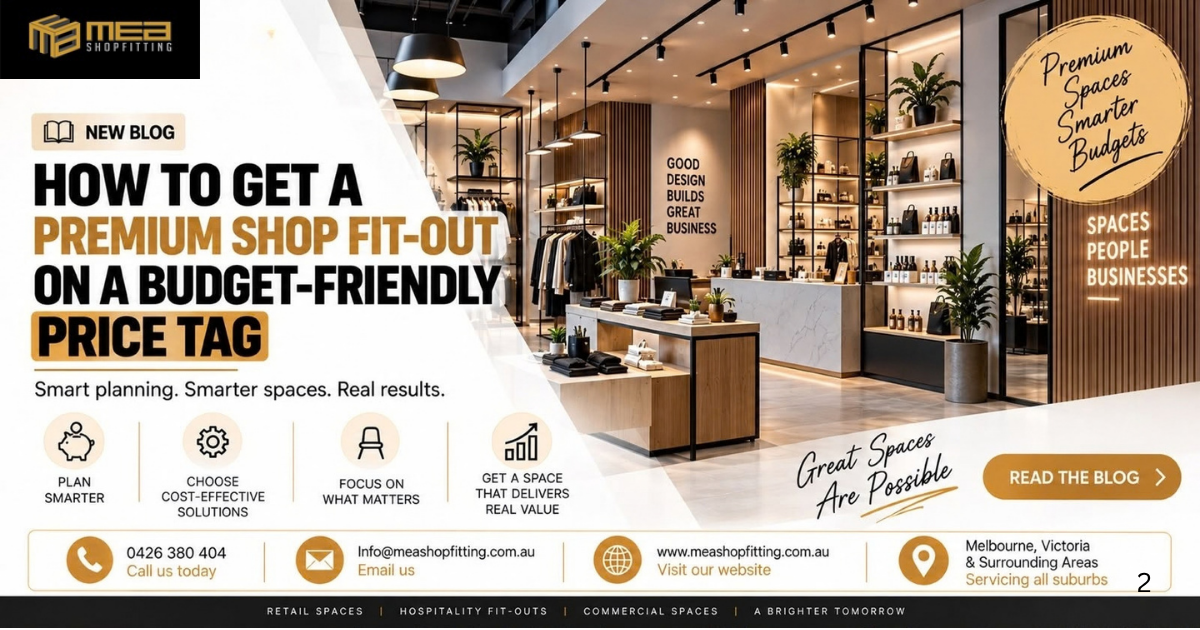
Smart planning. Smarter spaces. Real results.
If you’ve ever sat down with a fit-out quote and felt your stomach drop, you’re not alone. Almost every business owner we speak to at MEA Shopfitting starts the conversation the same way: “I want it to look premium, but I don’t have an unlimited budget.” The good news is that those two things aren’t actually in conflict. A great-looking, high-performing commercial space isn’t about how much money you throw at it — it’s about how well the project is planned, which decisions you spend on and which ones you don’t, and who you trust to build it.
We’ve delivered retail, hospitality, office and commercial fit-outs right across Melbourne, Victoria for years, and the businesses that end up with the best result for their money almost always follow the same pattern. Below, we’ve broken down exactly how it’s done — no fluff, no jargon, just what actually works.
Plan Smarter: The Budget Is Won or Lost Before Construction Starts
Most people think cost control happens on site, with tradespeople and materials. In reality, the biggest savings (and the biggest cost blowouts) are decided weeks before a single wall goes up.
A shop fit-out is essentially the process of turning an empty commercial tenancy — retail, café, restaurant, office, salon or clinic — into a fully functioning space built around your brand and your customers. The businesses that get the best value treat planning as its own project, not a box to tick before the “real work” begins. That means:
- Getting your brief right first. Know what the space needs to do for your customers and your staff before you start picking finishes. A café needs a completely different flow to a fashion boutique or a medical clinic, and getting the layout wrong is one of the most expensive mistakes to fix later.
- Locking in your design before construction starts. Changes made mid-build are almost always more expensive than the same change made on paper. A detailed plan, agreed upfront with your shopfitter, protects your budget from the “oh, can we just move that wall” conversations that quietly add thousands to a project.
- Understanding council, landlord and building requirements early. Every commercial tenancy in Victoria comes with its own mix of landlord approvals, building permits and Australian Standards to work through. Sorting this out at the start — rather than discovering a compliance issue halfway through construction — is one of the simplest ways to avoid delays and rework.
- Working with one team from start to finish. Juggling a designer, a builder, an electrician and a shopfitter separately usually costs more than it saves. When one experienced team manages design, permits, project management and construction together, decisions get made faster and nothing falls through the cracks.
Choose Cost-Effective Solutions Without Cutting Corners
“Budget-friendly” doesn’t mean cheap, and it definitely doesn’t mean cutting corners on the things that keep your business running. It means being deliberate about where your money goes.
Invest in the bones, save on the trends. Permanent fixtures, electrical work, air conditioning, flooring and joinery are the backbone of your fit-out — these are expensive and disruptive to redo, so they’re worth doing properly the first time. Trend-driven finishes — paint colours, signage, soft furnishings — are far cheaper to refresh down the track, so there’s less pressure to spend big on them now.
Get real quotes, not guesses. Fit-out costs vary enormously depending on the scope, the trade mix and the finish level, so there’s no such thing as a one-size-fits-all price. A proper site visit and a detailed, itemised quote from an experienced shopfitter will always serve you better than a rough figure pulled from a Google search. It also means you’re comparing apples with apples if you’re weighing up more than one quote.
Reuse and repurpose where it makes sense. If you’re moving into a previously fitted space, don’t assume everything needs to go. Existing flooring, ceilings, lighting or joinery that’s in good condition can often be incorporated into the new design, which reduces both demolition costs and material costs.
Avoid the “while we’re at it” trap. Scope creep is one of the quietest budget killers in any fit-out. It’s easy to add “just one more thing” once construction is underway, but each addition affects the schedule as well as the price. A clear, signed-off scope from the outset keeps everyone — you and your shopfitter — accountable to the same plan.
Focus on What Matters to Your Customers
Not every square metre of your fit-out carries equal weight. The entrance, the counter or point-of-sale area, the first few metres a customer sees when they walk in — these are the spaces that do the heavy lifting for your brand. They’re worth the extra attention. Storage areas, back-of-house zones and staff spaces matter for operations, but they don’t need the same level of finish as the areas your customers actually experience.
This is also where good design pays for itself. A well-planned layout that makes smart use of natural light, sightlines and traffic flow can make a modest space feel considerably more premium than a poorly planned space with double the budget. Good design builds great business — it’s not just a nice phrase, it’s a genuinely practical principle that shapes how customers feel the moment they walk through your door.
Flexibility is worth building in too. Movable partitions, modular joinery and multi-purpose zones are becoming increasingly common in Melbourne fit-outs, because they let a business adapt its layout as it grows or as trends shift, without needing another full renovation down the track.
Get a Space That Delivers Real Value For Shop Fit-Out on a Budget
At the end of the day, a fit-out isn’t a cost — it’s an investment in how your business performs. A space that’s laid out properly, built with quality materials in the right places, and finished with your customer experience in mind will earn its keep long after the invoices are paid. A space that’s rushed, poorly planned or built with the cheapest possible materials tends to cost more in the long run, through repairs, reduced customer appeal, or an early need for another fit-out.
The businesses that get the best return on their fit-out budget are the ones that partner with a shopfitter who understands both the construction side and the business side — someone who can tell you honestly where to spend, where to save, and how to keep the whole project on schedule so you’re not losing trading days to delays.
Fit-Outs Across Melbourne and Regional Victoria
While we’re based in Melbourne, our team regularly works with business owners well beyond the CBD. We deliver commercial and retail fit-outs across greater Melbourne and into regional Victoria, including Bendigo, Ballarat, Geelong, Melton, Somerville, Moe, Officer, Seymour and the surrounding suburbs. Wherever your business is opening, relocating or renovating, our approach stays the same — smart planning, honest advice on where your budget should go, and a build quality that reflects well on your brand for years to come.
Frequently Asked Questions About Shop Fit-Out on a Budget
1. How much does a shop fit-out cost in Melbourne?
There’s no single figure, because every fit-out is different — it depends on the size of the space, the type of business, the finish level and the amount of construction work involved. The best way to get an accurate figure is a site visit and a detailed, itemised quote rather than a general online estimate.2. Can I really get a premium-looking fit-out on a modest budget?
Yes, and it comes down to planning rather than spending. Getting the layout and design locked in before construction starts, choosing where to invest (like fixtures and electrical work) versus where to save (like trend-led finishes), and avoiding scope creep during the build all make a bigger difference to the finished look than simply increasing the budget.3. Do you handle projects outside Melbourne CBD?
Yes. Alongside Melbourne and its surrounding suburbs, we regularly deliver fit-outs in regional Victoria, including Bendigo, Ballarat, Geelong, Melton, Somerville, Moe, Officer and Seymour.4. How long does a typical commercial fit-out take?
It depends on the size and complexity of the project. A smaller retail or café fit-out might take a few weeks, while a larger office, medical or shopping centre tenancy can take several months, particularly where permits or landlord approvals are required.5. Do I need council or landlord approval for my fit-out?
Most commercial fit-outs require some level of landlord sign-off and, depending on the scope of works, a building permit as well. An experienced shopfitter who understands local council and landlord requirements can manage this process for you, so it doesn’t hold up your project.
Ready to Start Planning Your Fit-Out?
A premium result on a realistic budget starts with the right conversation. Get in touch with MEA Shopfitting today for an obligation-free chat about your space.
📞 0426 380 404
📧 info@meashopfitting.com.au
🌐 www.meashopfitting.com.au
📍 Melbourne, Victoria & Surrounding Suburbs