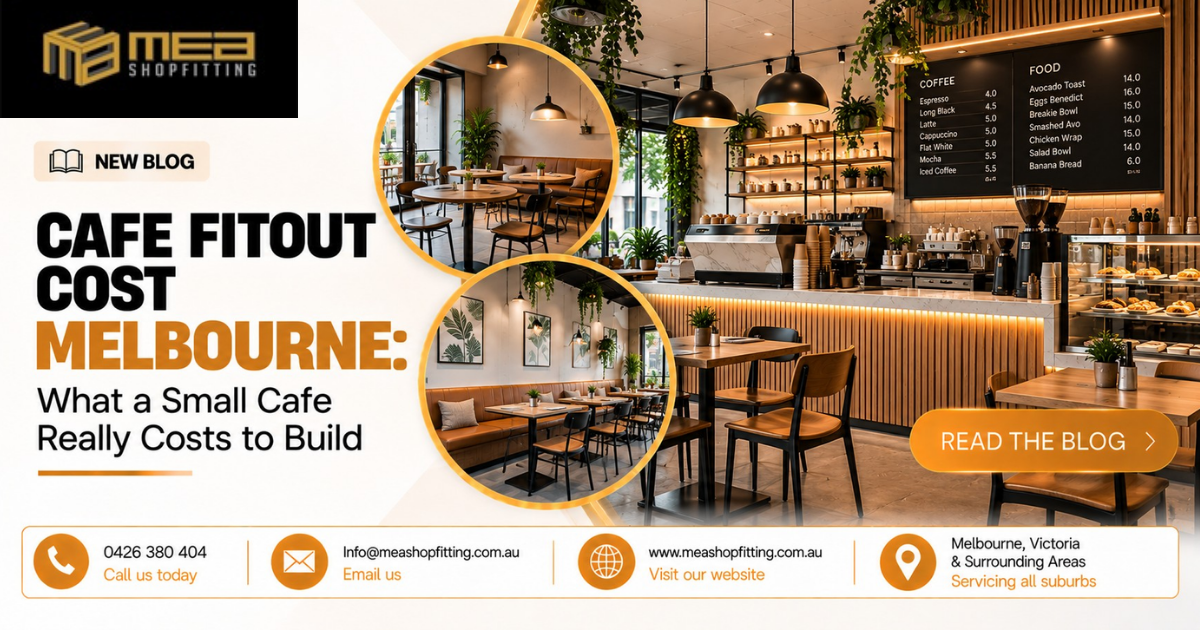
Opening a café in Melbourne is an exciting business opportunity, but understanding the cost of your fitout before construction begins is essential. From a compact takeaway café to a small neighbourhood coffee shop, the total investment depends on the condition of the premises, the design, equipment requirements, materials, and the amount of construction work involved.
A well-planned café fitout can help you create an attractive customer environment, improve staff efficiency, and make the most of your available space. However, without proper budgeting, unexpected expenses can quickly affect your opening timeline and profitability.
In this guide, MEA Shopfitting explains the key factors that influence café fitout costs in Melbourne, the expenses small café owners should consider, and how to plan a functional space without compromising quality.
How Much Does a Small Café Fitout Cost in Melbourne?
The cost of a small café fitout varies significantly depending on the size of the premises, the existing condition of the space, and the level of customisation required.
As an initial budgeting guide, a small café fitout might fall within these indicative ranges:
| Fitout type | Indicative budget |
|---|---|
| Basic or cosmetic fitout | $20,000–$50,000 |
| Standard small café fitout | $50,000–$100,000 |
| Premium or extensive fitout | $100,000–$200,000+ |
These figures are broad planning estimates in Australian dollars, not fixed quotations or verified market averages. Actual costs may be lower or higher depending on the project scope, equipment, services, site conditions and inclusions. Confirm current pricing with a qualified fitout contractor.
A space that already has suitable plumbing, electrical connections, flooring and ventilation may require less work than an empty commercial tenancy that needs substantial construction.
It is also important to distinguish the fitout budget from the total cost of opening a café. Business registration, lease expenses, stock, staff wages, insurance and working capital may need separate budgets.
1. Size and Condition of Your Café Premises
The size of your café is one of the main factors influencing the overall fitout cost. A larger space may require more flooring, lighting, seating, cabinetry and finishing materials.
However, floor area alone does not determine the final price. A small café with extensive structural changes or complicated service requirements can cost more per square metre than a larger, straightforward space.
Before committing to a tenancy, inspect the existing condition of the premises. Check the flooring, walls, ceiling, electrical supply, plumbing, ventilation and existing amenities. Identifying necessary upgrades early can help you develop a more realistic budget.
2. Café Layout and Interior Design
Your café layout affects both construction costs and day-to-day operations. A thoughtful design should create a comfortable customer experience while allowing staff to prepare orders, serve customers and move safely throughout the workspace.
Important layout elements include:
- Customer entry and ordering areas
- Coffee preparation and service counters
- Kitchen or food preparation zones
- Seating arrangements and customer circulation
- Storage and staff facilities
- Accessible paths and suitable amenities
A simple, efficient layout can help control costs. Custom counters, feature walls, decorative ceilings and specialised finishes may increase the budget, so prioritise design elements that support your brand and business objectives.
3. Coffee Machines and Commercial Kitchen Equipment
Equipment is a significant part of many café budgets. Your requirements will depend on whether you plan to serve coffee and pastries, prepare light meals, or operate a full commercial kitchen.
Potential equipment expenses include:
- Commercial espresso machines and coffee grinders
- Refrigerators and display fridges
- Commercial dishwashers
- Ovens, cooktops and food preparation equipment
- Stainless-steel benches and sinks
- Storage shelving and small appliances
Before purchasing equipment, confirm its dimensions, power requirements, water connections and ventilation needs. Planning these details early helps avoid expensive modifications during installation.
4. Plumbing, Electrical and Ventilation
Plumbing and electrical work can substantially influence your café fitout budget, especially when the existing premises are not designed for hospitality use.
Your project may require additional power outlets, lighting circuits, water supply, drainage, hot water systems and dedicated equipment connections.
Cafés preparing hot food may also require specialised exhaust ventilation, grease management and other kitchen services. The requirements depend on the menu, equipment and applicable regulations.
Arrange for qualified professionals to assess the premises before finalising your design. This helps identify technical requirements before construction starts.
5. Materials, Flooring and Finishes
Materials influence both the appearance and long-term maintenance costs of your café.
Popular choices include timber-look finishes, commercial-grade flooring, durable benchtops, tiled splashbacks, feature lighting and easy-to-clean wall surfaces.
When selecting finishes, consider:
- Durability in high-traffic areas
- Resistance to spills and moisture
- Ease of cleaning and maintenance
- Compatibility with food preparation areas
- Overall appearance and brand identity
You do not need expensive materials throughout the entire café. Investing in a distinctive counter or feature wall while choosing practical finishes elsewhere can create a premium appearance without unnecessary spending.
6. Custom Joinery and Café Counters
Custom joinery helps you make the most of a compact café, particularly when space is limited.
A purpose-built service counter can accommodate the coffee machine, point-of-sale system, under-counter refrigeration and storage in a carefully planned arrangement. Custom shelving and cabinetry can also improve organisation while reinforcing your brand identity.
Ready-made fittings may reduce upfront costs where standard dimensions suit your space. However, they may require adjustments or offer less flexibility than custom solutions.
The right choice depends on your layout, operational needs and budget.
7. Permits, Compliance and Professional Fees
Compliance should be considered from the beginning of your project rather than added to the budget at the last minute.
Depending on the premises and proposed work, you may need building approvals, plumbing and electrical compliance, food business registration, planning approval, accessibility provisions or other permits and inspections.
Requirements vary according to the local council, building classification, tenancy conditions and the nature of the proposed fitout. Mechanical ventilation, fire safety, emergency exits and accessible facilities may also require specific attention.
Consult the relevant local council and qualified building professionals to establish which approvals apply to your project.
8. How to Reduce Café Fitout Costs Without Compromising Quality
A successful café fitout is not necessarily the most expensive one. The goal is to invest in the features that improve customer experience, operational efficiency and long-term durability.
Consider these practical cost-saving strategies:
Keep the existing services where practical: Retaining suitable plumbing, electrical connections and ventilation can reduce relocation costs.
Finalise your design early: Late changes can lead to material waste, additional labour and construction delays.
Prioritise essential equipment: Select equipment that matches your menu and expected demand instead of purchasing unnecessary appliances.
Choose durable materials: Affordable finishes that withstand daily use can reduce future maintenance and replacement expenses.
Compare detailed quotations: Request itemised quotes that explain inclusions, exclusions, provisional allowances and variations.
Allow a contingency: Set aside a budget for unforeseen site conditions or necessary changes. The appropriate allowance depends on how well the premises have been assessed and how much uncertainty remains.
9. How Long Does a Small Café Fitout Take?
The project timeline depends on the complexity of the design, the condition of the premises, equipment lead times, contractor availability and approval requirements.
A cosmetic refresh may take considerably less time than a full hospitality fitout involving new plumbing, electrical services, ventilation and kitchen construction.
Before starting, establish a realistic schedule covering design, approvals, procurement, construction, equipment installation, inspections and final preparation for opening.
Planning these stages together helps reduce delays and gives you a clearer picture of when the café can begin trading.
10. Why Choose a Professional Café Fitout Company?
Working with an experienced shopfitting team can help coordinate the different elements of your project, from spatial planning and custom joinery to finishes and installation.
A professional approach helps ensure the design reflects your business requirements while considering practical construction constraints.
When comparing café fitout companies in Melbourne, review their hospitality experience, previous projects, quotation details, communication process and ability to coordinate relevant trades.
Ask what is included in the proposal and which items must be arranged separately. Clear expectations help reduce misunderstandings and make budget management easier.
Conclusion: Plan Your Melbourne Café Fitout With Confidence
The cost of building a small café in Melbourne depends on much more than its floor area. Layout, equipment, plumbing, electrical work, ventilation, materials, custom joinery and compliance requirements all influence the final investment.
The best way to manage your budget is to assess the premises early, define your operational requirements, finalise the design and obtain detailed quotations before construction begins.
With careful planning, you can create a stylish, practical café that supports your brand, serves customers comfortably and works efficiently for your team.
Planning a café fitout in Melbourne? MEA Shopfitting can help you explore practical shopfitting solutions tailored to your commercial space and business needs.
Frequently Asked Questions
1. What is the average cost of a small café fitout in Melbourne?
A small café fitout may require an indicative budget of $20,000 to $100,000 or more, depending on the scope of work. A basic refresh generally costs less than a complete fitout with new services, kitchen facilities and custom joinery. Obtain a project-specific quotation for a more accurate estimate.
2. What is usually included in a café fitout?
A café fitout may include interior design, flooring, painting, lighting, counters, custom joinery, seating, plumbing, electrical work and kitchen preparation areas. Equipment, approvals, ventilation and external signage may be included or quoted separately, so always confirm the scope.
3. Does a small café cost less to fit out than a large café?
A smaller café generally requires fewer materials and less furniture, but its cost depends on the work involved. A compact tenancy requiring major service upgrades can be more expensive per square metre than a larger space with suitable existing infrastructure.
4. Can I reduce café fitout costs by using existing fixtures?
Yes, where existing fixtures and services are in suitable condition and meet applicable requirements. Reusing counters, flooring, lighting or plumbing can reduce expenditure, but an assessment should be completed before deciding what can remain.
5. Do I need permits for a café fitout in Melbourne?
Depending on the project, you may need building or planning approvals, food business registration, trade compliance documentation and other permissions. Check with the relevant local council and qualified professionals before commencing work.
6. How long does a small café fitout take?
The timeline varies with the project scope, approvals, site conditions and availability of materials and trades. Cosmetic updates may be completed more quickly than extensive hospitality construction. Your contractor should provide a schedule based on the actual project requirements.
7. Should I choose custom or ready-made café fittings?
Custom fittings can maximise space and accommodate specific equipment, while ready-made options can be more economical when standard sizes suit your layout. Compare the total installed cost, durability and functionality before deciding.
8. How much contingency should I allow for a café fitout?
The appropriate contingency depends on the level of design detail and the condition of the premises. Discuss a suitable allowance with your contractor, particularly if existing services or concealed building conditions have not been fully assessed.
Summary
The cost of a small café fitout in Melbourne depends on the premises, layout, equipment, services, materials and compliance requirements. An indicative budget may range from $20,000 for a basic refresh to $100,000 or more for a more involved fitout. Assess your site, prioritise essential features, compare detailed quotations and plan for unexpected expenses before construction begins.
Contact MEA Shopfitting
Ready to plan your café fitout in Melbourne? Contact MEA Shopfitting to discuss your commercial space and project requirements.
MEA Shopfitting
- Phone: 0426 380 404
- Email: Info@meashopfitting.com.au
- Website: https://meashopfitting.com.au/
- Service area: Melbourne and surrounding areas
Create a café space that works beautifully for your customers and your business.