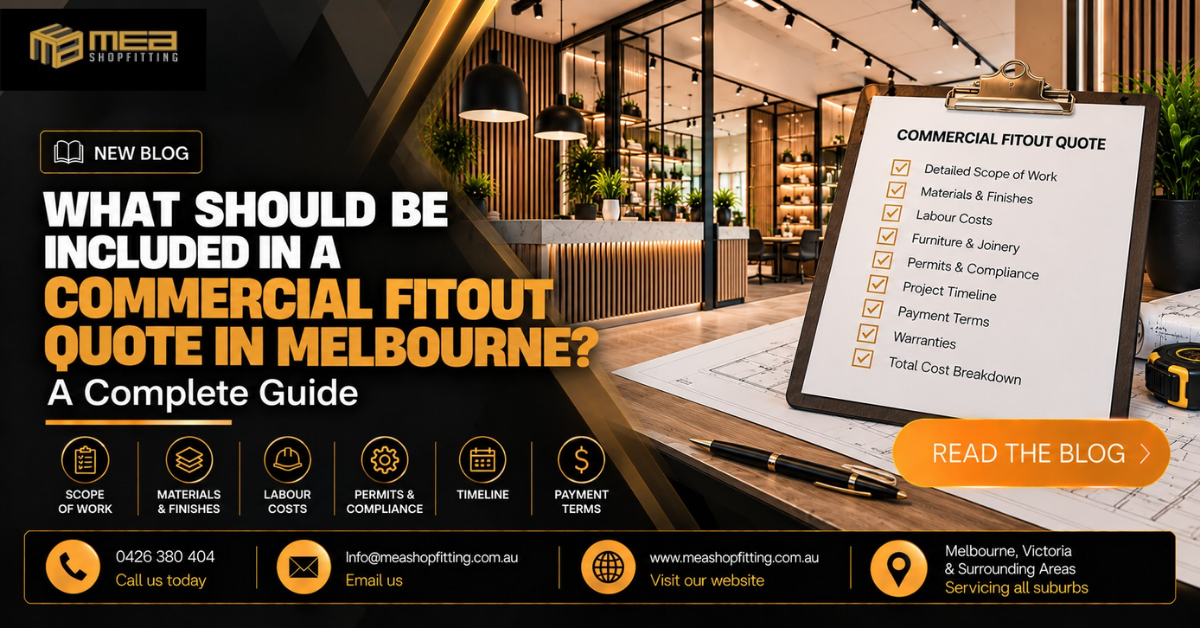
Planning a new retail store, café, restaurant, or commercial workspace requires careful budgeting and preparation. One of the most important steps is understanding your commercial fitout quote in Melbourne before starting construction.
A detailed quote helps business owners understand the project scope, materials, labour costs, timelines, and other expenses involved in transforming a commercial space. Without a clear breakdown, unexpected costs and project delays can become difficult to manage.
At MEA Shopfitting, we understand that every commercial space has different requirements. Whether you are opening a retail shop, renovating an existing business, or developing a hospitality venue, reviewing your fitout quote carefully can help you make informed decisions.
In this guide, we explain what should be included in a commercial fitout quote and what Melbourne business owners should check before choosing a shopfitting contractor.
1. Detailed Scope of Work
The scope of work is one of the most important sections of any commercial fitout quote. It explains exactly what the contractor will complete as part of the project.
Depending on your business requirements, the scope may include:
- Interior construction and partitioning
- Flooring installation
- Ceiling work and lighting
- Painting and wall finishes
- Shopfront construction
- Counter and reception desk installation
- Display shelving and storage
- Electrical and plumbing work
- Final finishing and installation
Make sure the quote clearly identifies what is included and what is excluded. This helps prevent misunderstandings once the project begins.
For example, a retail shop fitout may include custom display units, product shelving, a service counter, and feature lighting. A café fitout may require additional kitchen infrastructure, plumbing, ventilation, and food preparation areas.
2. Materials and Finishes
Materials and finishes directly affect the appearance, durability, and overall cost of your commercial space.
Your quote should specify the main materials proposed for the project, including flooring, wall finishes, cabinetry, benchtops, shelving, and joinery.
Check whether the quote identifies the following:
- Material types and specifications
- Colours and finishes
- Joinery and cabinetry details
- Flooring products
- Hardware and fittings
- Any nominated brands or product allowances
If the quote includes an allowance for materials rather than a confirmed selection, ask how any price difference will be calculated.
Choosing suitable materials is particularly important for high-traffic retail stores, cafés, and hospitality venues. Durable, easy-to-maintain finishes can help reduce ongoing maintenance requirements.
3. Labour Costs
Labour is another major component of a commercial fitout quote. Depending on the project, different trades may be required to complete the installation and construction work.
Labour costs may cover carpenters, electricians, plumbers, painters, plasterers, flooring installers, and other specialist trades.
Your quote should make it reasonably clear which labour activities are included and whether the price is fixed or based on estimated hours.
You should also ask whether installation, site supervision, project coordination, and final adjustments are included in the quoted amount.
Understanding these details helps you compare quotes fairly rather than choosing a contractor based only on the lowest advertised price.
4. Furniture, Fixtures and Joinery
Furniture, fixtures, and joinery help create a functional and visually appealing commercial environment.
For retail businesses, this may include product displays, shelving, cash registers or checkout counters, storage cabinets, and custom merchandising units.
For cafés and restaurants, the requirements may include service counters, seating, tables, cabinetry, and suitable food preparation fixtures.
A professional shopfitting quote should identify the major items being supplied and installed. Where possible, request drawings, measurements, material specifications, or itemised allowances.
Custom joinery can influence both the budget and construction schedule, so it is worth confirming these details before approving the project.
5. Permits, Approvals and Compliance
Commercial fitout projects may require permits, building approvals, landlord consent, or other compliance-related work, depending on the premises and the proposed changes.
Your quote should explain which approval-related services are included and which responsibilities remain with the business owner.
Potential requirements may involve:
- Building and planning approvals, where applicable
- Electrical and plumbing compliance
- Accessibility considerations
- Fire safety requirements
- Mechanical ventilation requirements
- Landlord or shopping centre approvals
- Relevant building standards and regulations
Not every project requires the same approvals. Requirements depend on the building, the intended use, the proposed works, and the relevant authorities.
Ask your contractor to identify any known approval requirements and clarify whether application fees, consultant fees, inspections, and certification costs are included or excluded.
6. Project Timeline
A commercial fitout timeline helps you plan your opening date, staff arrangements, stock deliveries, and other business activities.
Your quote or accompanying project schedule should outline the expected stages of work, such as:
- Initial planning and design coordination
- Material selection and ordering
- Site preparation and demolition, if required
- Construction and service installations
- Joinery and fixture installation
- Finishing work and inspections
- Final handover
Ask whether the timeline depends on landlord approval, material availability, design sign-off, or other external factors.
It is also useful to understand how delays will be communicated and managed. While no contractor can guarantee that every project will run without interruptions, a realistic schedule helps establish clear expectations.
7. Payment Terms and Conditions
Before accepting a commercial fitout quote in Melbourne, carefully review the payment terms.
The quote or contract should explain the deposit, progress payments, invoicing arrangements, and final payment requirements.
Check the following details:
- Deposit amount and when it is payable
- Progress payment milestones
- Payment due dates
- GST treatment
- Costs for approved variations
- Final payment and handover conditions
Avoid relying on verbal agreements for important financial arrangements. Make sure the agreed terms are documented in writing and that you understand the payment schedule before work begins.
8. Total Cost Breakdown and GST
A transparent quote should show how the total project price has been calculated.
Depending on the project, the breakdown may include construction, labour, materials, joinery, equipment installation, subcontractors, project management, and other applicable charges.
Check whether the quoted price includes GST and whether any provisional sums or allowances may change after further investigation or final selections.
You should also ask about potential additional costs, such as:
- Unforeseen site conditions
- Structural repairs
- Additional electrical or plumbing work
- Changes to approved designs
- Upgraded materials
- After-hours work
- Waste removal or specialist equipment hire
The purpose is not simply to find the cheapest quote. It is to understand the likely total cost and the conditions that could affect your budget.
9. Variations and Additional Work
Changes can arise during a commercial fitout because of revised designs, site conditions, material substitutions, or additional business requirements.
A professional agreement should explain how variations are handled.
Before approving a variation, request written details of the additional work, the price adjustment, and any effect on the completion date.
This process helps both the business owner and contractor maintain a clear record of agreed changes.
10. Insurance, Warranties and Handover
Before engaging a commercial shopfitting contractor, ask about relevant insurance, workmanship warranties, and documentation provided at completion.
Depending on the project, handover documents may include applicable compliance certificates, product information, warranty details, and maintenance instructions.
You should also confirm how defects or incomplete items identified during the final inspection will be recorded and addressed.
A clear handover process gives you a better understanding of what has been completed and what support is available after the fitout.
How to Compare Commercial Fitout Quotes in Melbourne
When comparing contractors, make sure each quote is based on a similar scope of work, material specification, and project requirement.
Use this checklist before making your decision:
-
The scope of work is clearly documented.
-
Materials and finishes are specified.
-
Labour and installation costs are explained.
-
Joinery and fixtures are identified.
-
Approval and compliance responsibilities are clarified.
-
The estimated project timeline is provided.
-
GST and payment terms are clear.
-
Exclusions and provisional sums are listed.
-
Variation procedures are documented.
-
Insurance, warranties, and handover arrangements are discussed.
A lower quote may exclude essential work or use different material allowances. Comparing the details helps you understand which proposal offers the best value for your business.
Why Choose MEA Shopfitting?
MEA Shopfitting supports businesses looking to create practical, attractive, and well-planned commercial environments in Melbourne and surrounding areas.
Whether you are preparing a new retail store, upgrading an existing shop, or planning a hospitality fitout, understanding your requirements from the beginning can help make the process more organised.
We focus on understanding your business needs, discussing project requirements, and helping you plan the fitout around your space and objectives.
If you are preparing a new commercial fitout, contact MEA Shopfitting to discuss your project and the next steps.
Frequently Asked Questions About Commercial Fitout Quote in Melbourne
1. What should a commercial fitout quote include?
A commercial fitout quote should outline the scope of work, materials, labour, fixtures and joinery, applicable approval requirements, project timeline, payment terms, GST, exclusions, and variation procedures.
2. How do I compare commercial fitout quotes in Melbourne?
Compare quotes using the same project scope and specifications. Review the included services, material quality, labour costs, exclusions, timelines, warranties, and payment terms rather than focusing only on the total price.
3. Are permits included in a commercial fitout quote?
Not always. Some contractors include assistance with approvals, while others exclude application fees, consultants, or certification costs. Ask your contractor to confirm what is covered and who is responsible for obtaining the necessary approvals.
4. Can the final commercial fitout cost change?
Yes. Costs may change because of design revisions, unforeseen site conditions, upgraded materials, or additional work. Review the variation process and request written approval before proceeding with extra work.
5. Should GST be included in a commercial fitout quote?
The quote should clearly state whether GST is included or additional. Confirm the final payable amount before accepting the proposal.
6. How long does a commercial fitout take in Melbourne?
The timeframe depends on the size and complexity of the space, approvals, material availability, and the work required. Request a project-specific schedule from your contractor rather than relying on a general estimate.
7. What questions should I ask before accepting a shopfitting quote?
Ask what is included and excluded, which materials will be used, whether approvals are covered, how payments are scheduled, how variations are priced, and what warranties and handover documents will be provided.
8. Can MEA Shopfitting help with retail and hospitality fitouts?
MEA Shopfitting works with commercial fitout and shopfitting projects. Contact the team to discuss your retail, café, restaurant, or other commercial space requirements and confirm the services suitable for your project.
Summary
A detailed commercial fitout quote helps you understand the costs, responsibilities, materials, and schedule involved in your project. Before approving a quote, review the scope of work, labour, joinery, approvals, payment terms, GST, exclusions, and warranties.
For Melbourne business owners, comparing detailed and clearly documented proposals can reduce misunderstandings and support better project planning.
MEA Shopfitting can help you discuss your commercial fitout requirements and plan the next steps towards creating a functional business space.
Contact MEA Shopfitting
Planning a new shop, café, restaurant, or commercial workspace? Get in touch with MEA Shopfitting to discuss your project requirements.
Business: MEA Shopfitting
Phone: 0426 380 404
Email: info@meashopfitting.com.au
Website: https://meashopfitting.com.au/
Service Area: Melbourne, Victoria, and surrounding suburbs
Ready to plan your commercial fitout? Contact MEA Shopfitting today to discuss your project.