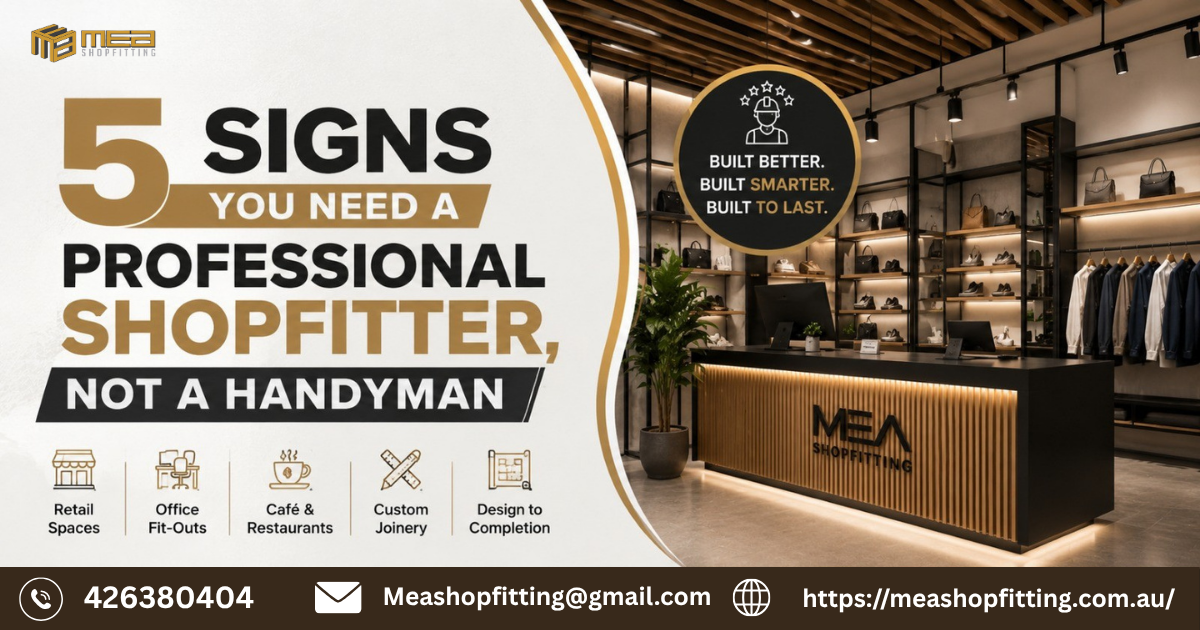
When planning a commercial fit-out, renovation or shop renovation, one of the most important decisions you will make is choosing the right professional for the job. Many business owners initially consider hiring a handyman to save money or manage smaller tasks. However, when your project involves retail spaces, office fit-outs, cafés, restaurants, custom joinery or a complete design-to-completion service, the expertise of About professional shopfitter can make a significant difference.
A professional shopfitter does much more than install shelves or assemble furniture. They understand how commercial spaces need to function, look and perform. From planning and construction to joinery, lighting, storage, finishes and final installation, an experienced shopfitting team helps transform an empty or outdated space into a professional environment that supports your business.
The wrong fit-out can lead to delays, poor workmanship, unexpected costs and a space that does not work effectively. The right shopfitter, on the other hand, can help you create a space that is attractive, practical, durable and aligned with your brand.
If you are unsure whether your project requires a handyman or a professional shopfitter, here are 5 important signs that it is time to work with a specialist.
1. Your Project Requires More Than Basic Repairs
A handyman can be an excellent choice for small maintenance jobs, minor repairs and simple installations. However, commercial fit-outs often involve multiple trades, detailed planning and specialist construction knowledge.
If your project includes tasks such as:
- Custom cabinetry
- Retail display shelving
- Reception counters
- Commercial storage solutions
- Wall partitions
- Flooring and ceiling work
- Electrical coordination
- Lighting installation
- Branded interiors
- Customer-facing displays
- Commercial joinery
- Complete space renovations
then a professional shopfitter is usually the better choice.
A commercial space needs to be designed and built with the daily operation of your business in mind. For example, a retail store needs effective product displays and customer flow. An office needs practical workspaces and storage. A café or restaurant requires an efficient layout that supports staff movement and customer experience.
A shopfitter understands how these different requirements work together.
Instead of simply completing individual jobs, a professional shopfitting team looks at the entire project as a complete environment.
Why this matters
Hiring different people for every part of a project can create communication problems. A professional shopfitter can help coordinate multiple elements of the fit-out, helping create a more organised and consistent result.
2. You Need Custom Joinery and Built-In Solutions
One of the biggest differences between a handyman and a professional shopfitter is the ability to deliver custom-built commercial joinery.
Standard, ready-made furniture may not always suit your space. Commercial premises often have unusual dimensions, specific storage requirements or unique branding needs.
Custom joinery can include:
- Retail counters
- Reception desks
- Display units
- Wall-mounted shelving
- Product cabinets
- Commercial storage
- Workstations
- Fitting room installations
- Restaurant counters
- Café cabinetry
- Feature walls
- Branded furniture
A professional shopfitter can help create solutions that are designed specifically for your space.
For example, a retail store may require display shelving that maximises wall space while keeping products easy to access. An office may need storage that works around existing walls, windows or structural elements. A reception area may require a custom desk that reflects the company’s branding.
These details can make a significant difference to the overall appearance and functionality of your commercial space.
Custom design creates a professional impression
Your commercial interior is often the first physical interaction customers have with your business. A well-designed space can communicate quality, professionalism and attention to detail.
Poorly fitted furniture, uneven finishes or mismatched materials can have the opposite effect.
A professional shopfitter helps ensure that your custom joinery is not only attractive but also practical and built to withstand regular commercial use.
3. Your Project Needs Professional Planning and Coordination
Commercial fit-outs can quickly become complicated.
A project may involve designers, architects, electricians, plumbers, flooring specialists, painters, joiners and other trades. Without proper coordination, even a relatively simple fit-out can experience delays and unexpected problems.
This is where working with a professional shopfitter can be highly beneficial.
A professional shopfitting team can help manage the process from the initial concept through to completion. Depending on the project, this may include:
- Understanding your business requirements
- Reviewing the existing space
- Developing the layout
- Planning materials and finishes
- Coordinating construction activities
- Managing custom joinery
- Organising installation
- Checking quality and finishes
- Completing the final fit-out
Good planning helps reduce unnecessary mistakes and helps ensure that different parts of the project work together.
The importance of project coordination
Imagine installing expensive custom cabinetry before electrical work has been completed. Or completing flooring before heavy construction work is finished. Poor coordination can result in damage, rework and additional costs.
An experienced shopfitter understands the correct order of work and can help coordinate the different stages of the project.
This can save valuable time and help create a smoother path from the initial design to the completed commercial space.
4. Your Business Needs a Space That Is Built for Commercial Use
A commercial environment is different from a residential space.
Retail stores, offices, cafés and restaurants often experience heavy daily use. Fixtures, surfaces, storage and furniture need to be practical and durable.
A professional shopfitter understands the demands of commercial environments.
They can help you select suitable materials and finishes based on factors such as:
- Daily customer traffic
- Staff usage
- Cleaning requirements
- Product display needs
- Storage requirements
- Durability
- Maintenance
- Brand appearance
- Available space
For example, a retail store may require strong shelving that can handle regular product changes. A restaurant may need surfaces that are easy to clean and maintain. An office may need durable workstations and practical storage.
A handyman may be able to complete individual tasks, but a professional shopfitter considers how the entire space will perform over time.
A good commercial fit-out is an investment
Your fit-out should not only look good on opening day. It should continue to function effectively months and years later.
Choosing appropriate materials, practical layouts and durable construction can help reduce the need for frequent repairs and replacements.
5. Your Project Needs a Professional Finish That Represents Your Brand
Your commercial space is an important part of your brand identity.
Whether you operate a clothing store, office, café, restaurant or another type of business, your interior environment can influence how customers and clients perceive you.
A professional shopfitter can help create a space that reflects your:
- Brand identity
- Business values
- Customer experience
- Product quality
- Professional image
- Long-term goals
A well-designed retail store can encourage customers to explore products. A professional office can create a more welcoming environment for clients and employees. A well-planned café or restaurant can improve customer experience and support efficient staff operations.
Your space should not feel like a collection of unrelated furniture and fixtures. It should feel intentional.
Design consistency matters
Materials, colours, lighting, joinery, signage and furniture should work together.
A professional shopfitter can help bring these elements together to create a cohesive and polished environment.
This is one of the key differences between simply completing a job and creating a professional commercial space.
Professional Shopfitter vs Handyman: Which One Is Right for Your Project?
Both professional shopfitters and handymen can provide valuable services, but they are suited to different types of work.
| Project Requirement | Handyman | Professional Shopfitter |
|---|---|---|
| Small repairs | Suitable | Suitable |
| Minor installations | Suitable | Suitable |
| Basic maintenance | Suitable | Suitable |
| Complete retail fit-out | Limited | Ideal |
| Custom commercial joinery | Limited | Ideal |
| Office fit-out | Limited | Ideal |
| Café or restaurant fit-out | Limited | Ideal |
| Design-to-completion projects | Limited | Ideal |
| Multi-trade coordination | Limited | Ideal |
| Brand-focused commercial interiors | Limited | Ideal |
If you only need a small repair or a simple installation, a handyman may be the right choice.
However, if you are creating or transforming a commercial environment, a professional shopfitter can provide the specialist knowledge and project coordination needed to achieve a better result.
What Types of Projects Can a Professional Shopfitter Handle?
A professional shopfitting team can work across a wide range of commercial environments.
Retail Shopfitting
Retail spaces need to be attractive, functional and designed around the customer journey.
Shopfitting services may include:
- Display shelving
- Retail counters
- Product displays
- Custom cabinetry
- Feature walls
- Storage
- Lighting coordination
- Branded interiors
The goal is to create a space that helps customers navigate the store while presenting products effectively.
Office Fit-Outs
A well-planned office can improve functionality, organisation and workplace presentation.
Office fit-outs may include:
- Reception areas
- Workstations
- Meeting rooms
- Storage
- Partitions
- Custom desks
- Display areas
- Staff facilities
A professional shopfitter can help maximise the available space while creating a practical and professional working environment.
Café and Restaurant Fit-Outs
Hospitality environments require careful planning.
The layout must consider both customer experience and staff efficiency.
A professional fit-out may include:
- Service counters
- Seating areas
- Custom cabinetry
- Storage
- Feature walls
- Customer-facing areas
- Commercial finishes
A successful café or restaurant design should look inviting while supporting smooth daily operations.
Custom Joinery
Custom joinery can help businesses make the most of their available space.
Instead of trying to fit standard furniture into a space, custom solutions can be designed around the exact requirements of the business.
This can improve:
- Storage
- Organisation
- Appearance
- Space efficiency
- Brand presentation
Design-to-Completion Services
For many business owners, managing multiple contractors can be stressful and time-consuming.
A design-to-completion shopfitting service can simplify the process by helping manage the project from the initial idea through to the finished space.
This approach can provide greater consistency and help reduce communication gaps between different stages of the project.
How to Choose the Right Professional Shopfitter
Choosing the right shopfitter is an important decision.
Before starting your project, consider the following:
1. Review Their Experience
Look for a company with experience in commercial environments similar to your project.
Retail, office, hospitality and custom joinery projects all have different requirements.
2. Ask About Their Services
Find out whether the shopfitter can assist with the complete scope of your project.
This may include design, joinery, installation, coordination and finishing.
3. Review Previous Work
A portfolio can help you understand the quality and style of the company’s work.
4. Discuss Your Budget
A professional shopfitter should be able to discuss your requirements and help you understand the project scope.
5. Consider Communication
Good communication is essential for a successful fit-out.
Choose a company that listens to your requirements, explains the process clearly and keeps you informed.
Why Choosing the Right Shopfitter Matters
A commercial fit-out is more than an expense. It is an investment in your business.
Your environment can affect:
- Customer experience
- Employee productivity
- Brand perception
- Business efficiency
- Product presentation
- Long-term maintenance costs
The right shopfitter can help you create a space that is designed around the way your business operates.
Rather than simply fixing problems as they appear, a professional shopfitter takes a complete approach to the project.
That means considering the design, functionality, materials, durability and final appearance from the beginning.
Final Thoughts: When You Need a Professional Shopfitter
If your project involves more than basic repairs, it may be time to work with a professional shopfitter.
From retail spaces and office fit-outs to cafés, restaurants, custom joinery and complete commercial renovations, professional shopfitting Contact Us for help turn your ideas into a practical and polished environment.
The key signs are clear:
- Your project involves multiple elements and trades.
- You need custom joinery or built-in solutions.
- You require professional planning and coordination.
- Your space needs to withstand commercial use.
- Your finished environment needs to represent your brand professionally.
A handyman can be the right choice for small jobs. But when your business needs a complete, durable and professional commercial space, a professional shopfitter is the specialist to consider.
Built better. Built smarter. Built to last.
5 Frequently Asked Questions About Professional Shopfitters
1. What does a professional shopfitter do?
A professional shopfitter designs, builds and installs commercial interior solutions for spaces such as retail stores, offices, cafés and restaurants. Their services may include custom joinery, display units, counters, storage, partitions, installations and complete commercial fit-outs.
2. What is the difference between a shopfitter and a handyman?
A handyman generally handles smaller repairs, maintenance tasks and basic installations. A professional shopfitter specialises in larger commercial projects that require planning, custom construction, joinery, coordination and professional finishing.
3. Do professional shopfitters provide custom joinery?
Yes. Many professional shopfitters provide custom joinery solutions such as retail counters, reception desks, shelving, display cabinets, storage units, workstations and other built-in commercial furniture.
4. Can a professional shopfitter manage a complete commercial fit-out?
Yes. Depending on the company, a professional shopfitter may offer services from initial planning and design through to construction, custom joinery, installation and final completion. This can make the process easier to coordinate.
5. When should I hire a professional shopfitter?
You should consider hiring a professional shopfitter when your project involves a complete commercial renovation, retail fit-out, office fit-out, café or restaurant fit-out, custom joinery or multiple stages of construction and installation.